The Heritage Library
Learn with the Krewe
Celtic tradition has always prized wisdom. The filí kept the poems, the seanchaí kept the stories, and the Salmon of Knowledge rewarded those who sought understanding. Our Heritage Library follows that same path: lessons and lore for every Shamrock, shelved by subject so you can learn at your own pace.
☘ 0 of 15 lessons complete
Kilts & Krewe Style7 modules
1The Kilt: Two Gaelic Traditions☘ Krewe style · start hereOpen ▾☘
What you'll learn
- A kilt is not a costume; it's Gaelic heritage you can wear, and the Krewe of Shamrock welcomes both great traditions on the parade route.
- The Irish tradition favors saffron and solid-color kilts and county tartans, patterns tied to place rather than family.
- The Scottish tradition marches in clan tartans, patterns tied to family names and handed down the generations.
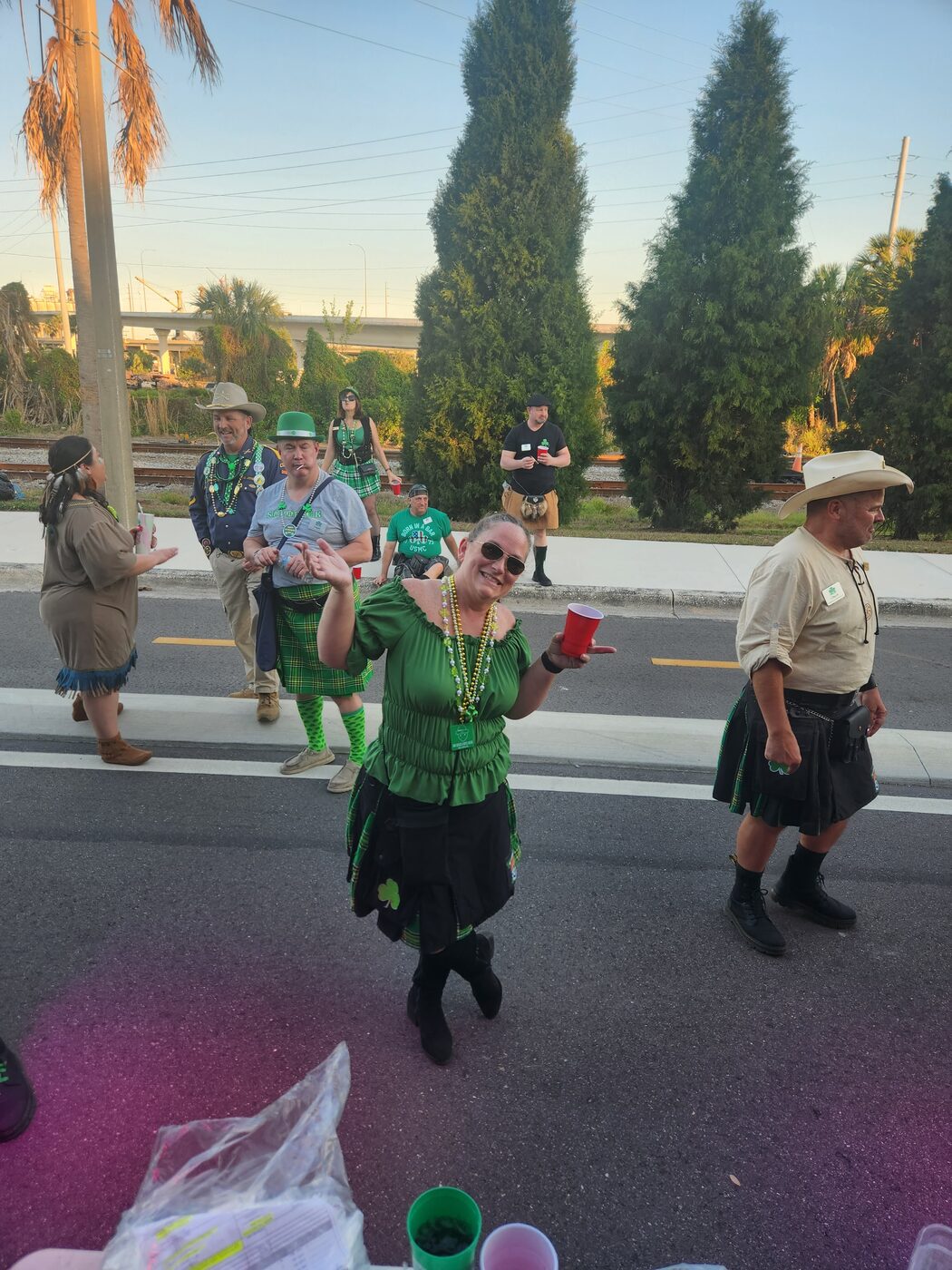
- On parade day, most of our men pair the kilt with a ghillie shirt, the loose lace-up shirt of the old Gaelic style that stays comfortable in the Florida sun.
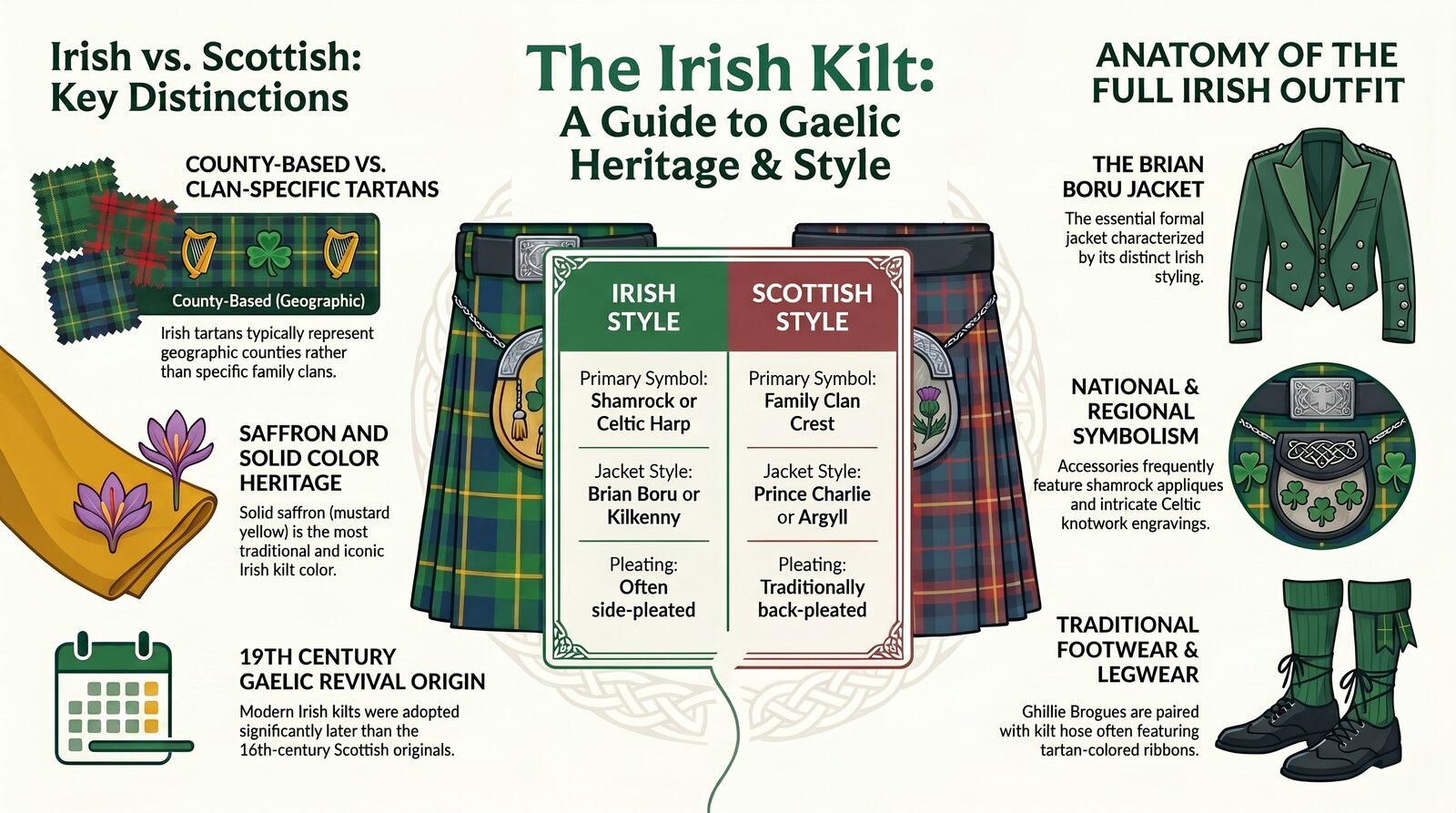 The krewe's field guide: Irish and Scottish kilt styles side by side
☘ Fun fact: We're Tampa's original kilted krewe: marching in tartan since 1999, long before Celtic style was everywhere at the bay's festivals.
Quick check: Which look belongs to the Irish kilt tradition?
2Formal Kilt Wear🥂 Krewe style · watch and dress the partOpen ▾☘
What you'll learn
- A kilt is true formal wear: at a black-tie evening like our Tartan Ball, it stands equal to any tuxedo.
- The Scottish formal standard is the Prince Charlie jacket and waistcoat, often with a fly plaid pinned at the shoulder with a brooch.
- The Irish formal answer is the Brian Boru jacket, a braided cutaway worn with a waistcoat and its own understated elegance.
- The finishing touches: a dress sporran, kilt hose with flashes, ghillie brogues laced up the calf, and a kilt pin to hold the apron true.
☘ Fun fact: The little "flashes" peeking below the fold of the kilt hose began life as garters that kept a marching Gael's hose from sliding down.
Quick check: Which jacket is the classic Irish formal kilt jacket?
3Women in Kilts: A Guide for the Ladies👑 Krewe style · wear it your wayOpen ▾☘
What you'll learn
- Yes, women wear kilts, and in the Krewe of Shamrock they do so proudly. Women across Ireland, Scotland, and the diaspora have worn kilts and kilted skirts for well over a century.
- Know your three terms: a true kilt is one wrapped length of pleated wool with straps and buckles; a kilted skirt is built the same way but lighter, closer-fitting, and offered in mini, knee, midi, and ankle lengths; a tartan skirt is any skirt sewn from tartan cloth. All three are welcome on the route.
- Choosing your cloth: an Irish county or family tartan, the green-gold-and-white Irish National tartan, traditional solid saffron, a Scottish clan tartan, or a universal tartan like Black Watch that anyone may wear.
- The signature parade look for many Krewe women is a corset or bodice over a white Celtic blouse; a Krewe t-shirt is always welcome too. A tartan sash pinned at the shoulder with a brooch is the classic women's alternative to a man's fly plaid.
- Practical wisdom: the parade route is about four miles, so comfortable shoes win; kilts sit at the natural waist, so measure before ordering; and custom kilts from Scotland or Ireland can take six to twelve weeks, so order early.
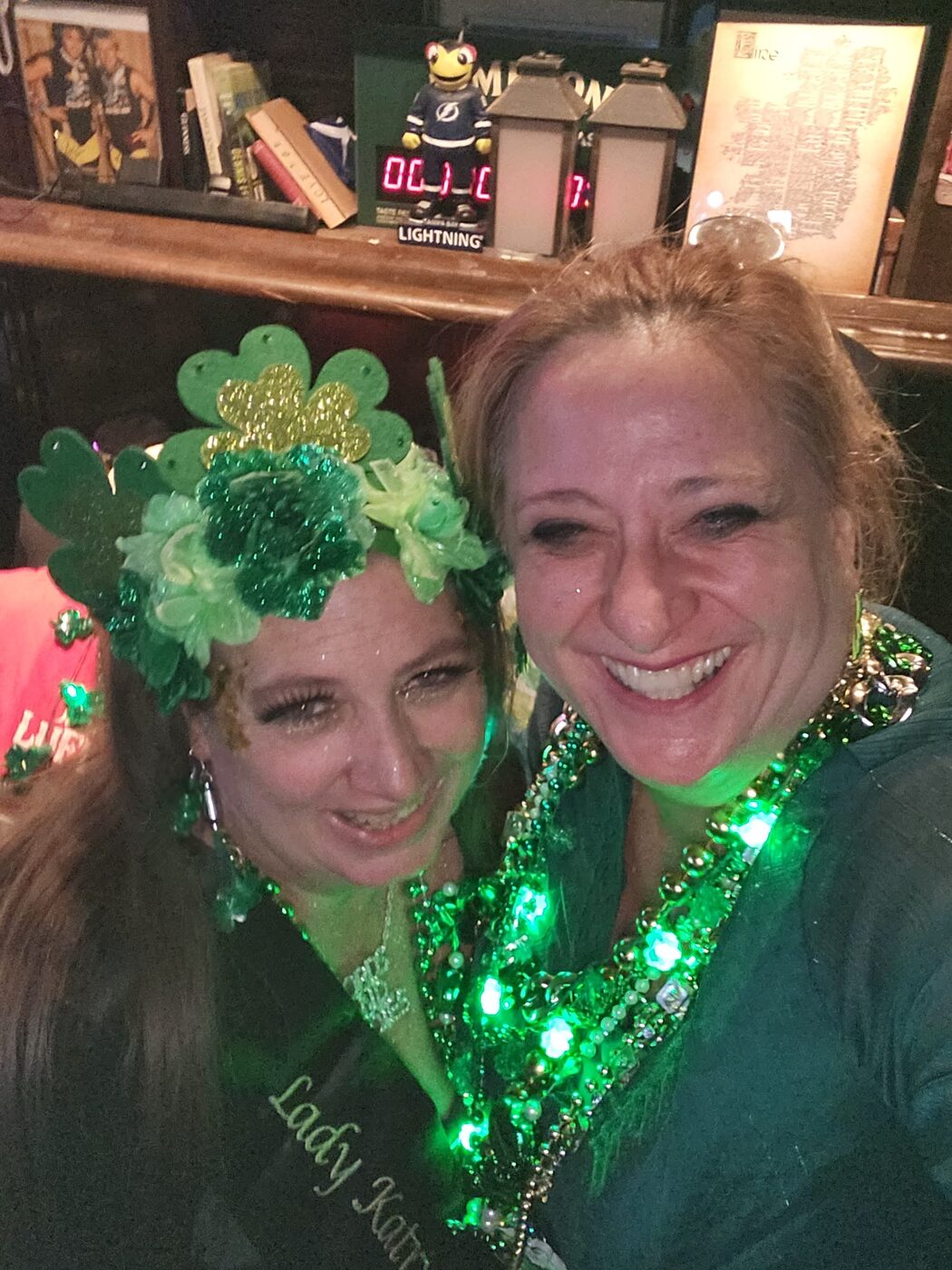 Krewe style is personal style: from saffron and county tartan to corsets and sashes
☘ Fun fact: Princess Diana, Emma Watson, and Madonna have all worn kilts in public, helping show the world that this traditional garment belongs to everyone.
Quick check: Which tartan is considered "universal," open for anyone to wear?
4Kilts in the Krewe📖 Reading · What we wear on parade dayOpen ▾📖
In the Krewe of Shamrock, the kilt is the uniform of the day, and both great Gaelic traditions are welcome on the route. Some members march Irish, in saffron or solid-color kilts and county tartans. Others march Scottish, in clan tartans handed down the family line. Wear whichever tradition calls to you; the only requirement is that you wear it proudly.
On parade morning you'll see every version of it rolling out together: saffron beside clan plaid, county tartan beside solid green, and ghillie shirts everywhere in the Florida sun. Add a sporran, kilt hose, and a good handful of beads, and you're parade-ready. New to kilts? The lesson cards above sort the styles, and any member will happily talk tartan with you.
5The Colors of the Cloth📖 Reading · What the hues of a tartan meanOpen ▾📖
Every color woven into a kilt carries a story. Green speaks of Ireland's lush scenery and of patriotism, tying the wearer to the land itself and the spirit of Saint Patrick. Blue recalls the ancient Irish aristocracy and loyalty; long before green took over, blue was the color of Gaelic kings. Gold stands for warmth and prosperity, the richness of the culture and the success of the Irish abroad.
Red honors courage and tenacity, the sacrifices made through every hard chapter of Irish history. Black represents power and persistence, the enduring strength of a people who would not be worn down. And saffron, that warm golden-orange of the traditional Irish kilt, is the banner of the Gaelic revival: a color chosen deliberately to say we are Irish, and proudly so.
So when the Krewe rolls out on parade morning in green and gold, saffron and plaid, it isn't just a pretty picture. It's a whole history told in thread, and every member wearing it becomes part of the telling.
6Kilt Myths & Legends📖 Reading · Sorting fact from folkloreOpen ▾📖
Few garments carry as many tall tales as the kilt. Did the Irish bring it to Scotland? Did tartan begin in the Highlands? Does the number of colors mark the wearer's rank, or hide a secret Ogham message woven into the cloth? The truth is often older, and stranger, than the legend.
The kilt-makers at Keltoi Gaelic Clothing have gathered the best-loved myths about kilts, tartan, and Highland wear and weighed each one against the historical record, from the Gaels of Dál Riata in their saffron léine and brat to the clan tartans devised in the weavers' sample books of the 1700s. A grand read for anyone proud of their Gaelic threads.
7Did the Irish Invent the Kilt?📖 Reading · From the Celtic Fire blogOpen ▾📖
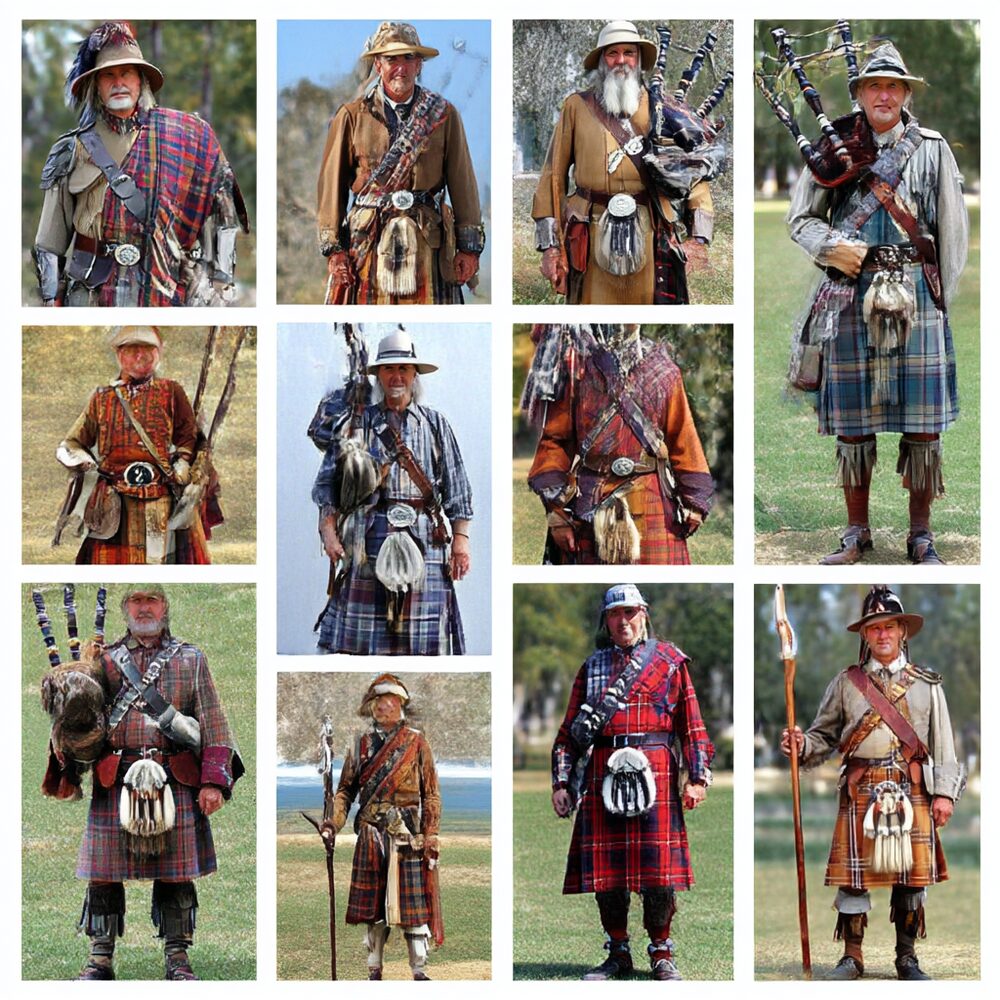
Around 432 AD, in the days of Saint Patrick, what did the Irish actually wear? Author Erin O'Quinn paints the picture from old manuscripts, Roman accounts, Ireland's earliest legends, and garments pulled from the preserving depths of the bog: the linen léine belted at the waist, the woolen brat cloak, leather bróga, and the bright, status-marking colors a person was allowed to wear.
And the big question her headline asks: did the Irish Gaels, pushing into Scotland in the fifth century, hand the skirt-like léine to the Scots, or borrow it from the roaming Scoti? It's a debate that has "raged for over a hundred years," and her warm, witty post is a lovely corner of a blog full of all things Irish.
Gasparilla & the Inter-Krewe Council3 modules
1Gasparilla: Tampa's Pirate Invasion🏴☠️ Parade culture · know the seasonOpen ▾☘
What you'll learn
- Gasparilla is Tampa's signature celebration, held nearly every year since 1904 and named for José Gaspar, a legendary pirate said to have terrorized the waters of the Gulf.
- Ye Mystic Krewe of Gasparilla, the city's first krewe, stages the famous "invasion": a flotilla sails into downtown, the mayor surrenders the key to the city, and the pirates parade in triumph.
- The Gasparilla Parade of Pirates rolls along Bayshore Boulevard before hundreds of thousands of spectators, making it one of the largest parades in the United States.
- A week earlier, the Children's Gasparilla parade gives families an alcohol-free day of floats, beads, and pirate fun; the Krewe of Shamrock marches in both.
- Since 2019, our multi-level medieval castle float, complete with its signature top-hat-wearing skull, has carried the green and gold down the route.
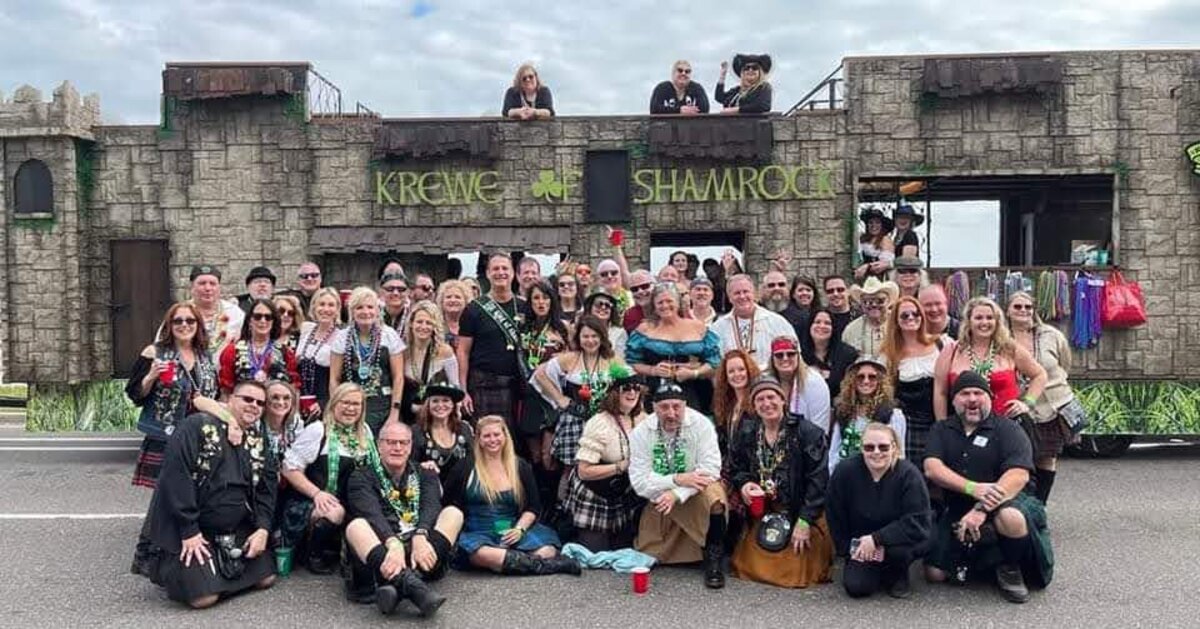 Parade season in Tampa Bay: where a kilted krewe marches with pirates
☘ Fun fact: José Gaspar himself is almost certainly a legend; no solid historical record of the pirate exists. Tampa threw a century of parades for a myth, and we think that's wonderfully Irish of them.
Quick check: What happens during the Gasparilla "invasion"?
2The Inter-Krewe Council & Tampa's Krewes🤝 Parade culture · our wider familyOpen ▾☘
What you'll learn
- A "krewe" is a social organization that parades and celebrates together; the word (an old-fashioned spelling of "crew") comes from the New Orleans Mardi Gras tradition of the 1850s.
- Tampa Bay is home to dozens of krewes, and the Inter-Krewe Council (IKC) is the association that brings them together: coordinating the shared parade calendar, promoting goodwill between krewes, and championing charitable work across the bay.
- Our "Big Four" parades each season are Children's Gasparilla, the Gasparilla Parade of Pirates, the Knights of Sant' Yago Knight Parade in historic Ybor City, and the St. Patrick's Day Parade.
- Our own story began inside this krewe family: in 1998 our five founders walked the Ybor City parades as security for Ye Loyal Krewe of Grace O'Malley before petitioning to march as a krewe of their own in 1999.
- Beyond the Big Four, the krewe also turns out for Santa Fest, Tampa Pride, and community events throughout the year.
☘ Fun fact: Ye Loyal Krewe of Grace O'Malley, the krewe our founders once guarded, is named for the real 16th-century Irish "pirate queen" Gráinne Ní Mháille, who commanded her own fleet and famously parleyed face-to-face with Queen Elizabeth I.
Quick check: Which of these is one of the Krewe of Shamrock's "Big Four" parades?
3From Grace O'Malley's Guard to a Krewe of Our Own📖 Reading · The founding story, 1998–1999Open ▾📖
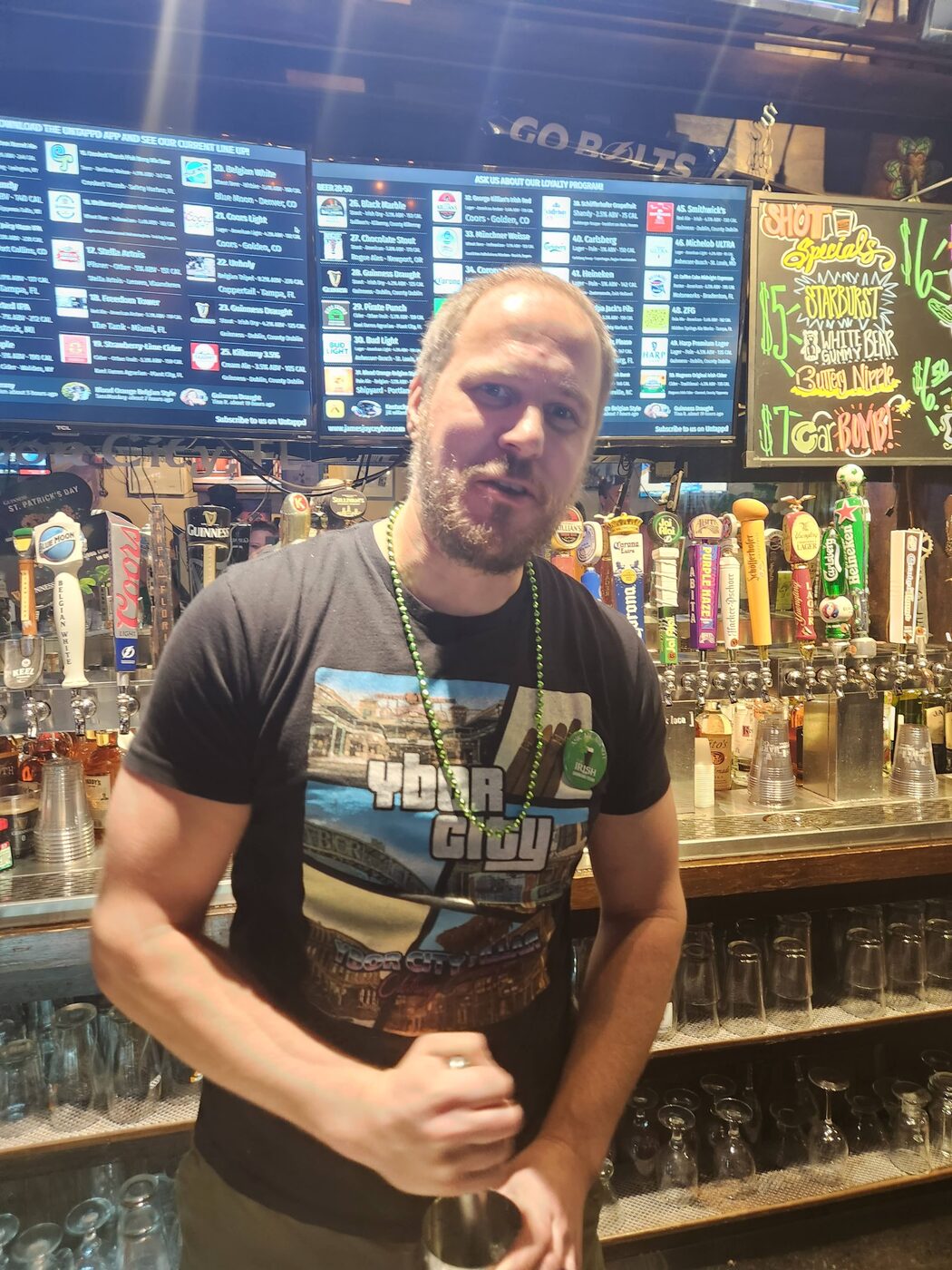
Every krewe has an origin story, and ours begins on someone else's parade route. In 1998, five friends, Matt Glow, Tim Hubbell, Hayden Polk, Chris Jenkins, and Steve Hubbell, walked the Ybor City parades as security for Ye Loyal Krewe of Grace O'Malley. They kept the route safe, watched the krewe they guarded having the time of their lives, and came away with one shared thought: we should have a krewe of our own.
After the 1999 Gasparilla season they made it official. With Don Cassels serving as the group's first spokesperson, they petitioned the St. Patrick's Day Parade Committee, and in 1999 the Krewe of Shamrock marched for the first time, kilts on and bagpipes playing. From the very beginning the krewe was built as an Irish-themed social and charitable organization, and from the very beginning the motto has been the same: All for Fun, Fun for All.
Today the krewe continues to welcome new faces, and while we celebrate Irish and Scottish traditions with everything we've got, Irish or Scottish ancestry has never been required. What's required is much simpler: show up, pitch in, and bring the craic.
Parade Day Know-How4 modules
1Parade Day Rules & Safety🛡 Member know-how · required readingOpen ▾☘
What you'll learn
- Boarding and leaving the float takes extreme caution: always step off backwards, and a designated safety person will be stationed there to assist you. Never stand on speaker or storage boxes.
- Walkers stay to the sides or behind the float, never directly in front of it and never in the gap between the float and the tow vehicle. Krewe marshals and spotters walk the whole route to keep spacing safe.
- Respect earned spots: don't move another member's bead bags or spot designations, including bags hanging from the hooks.
- Drinks stay in opaque cups or tumblers; glass containers and visible alcohol branding are banned, smoking is forbidden on the float, and float drivers and float crew remain completely sober.
- Everyone obeys law enforcement, parade officials, and Krewe security, full stop. Failure to comply means immediate ejection from the parade and suspension from the next one, and members are 100% responsible for their guests' behavior and attire.
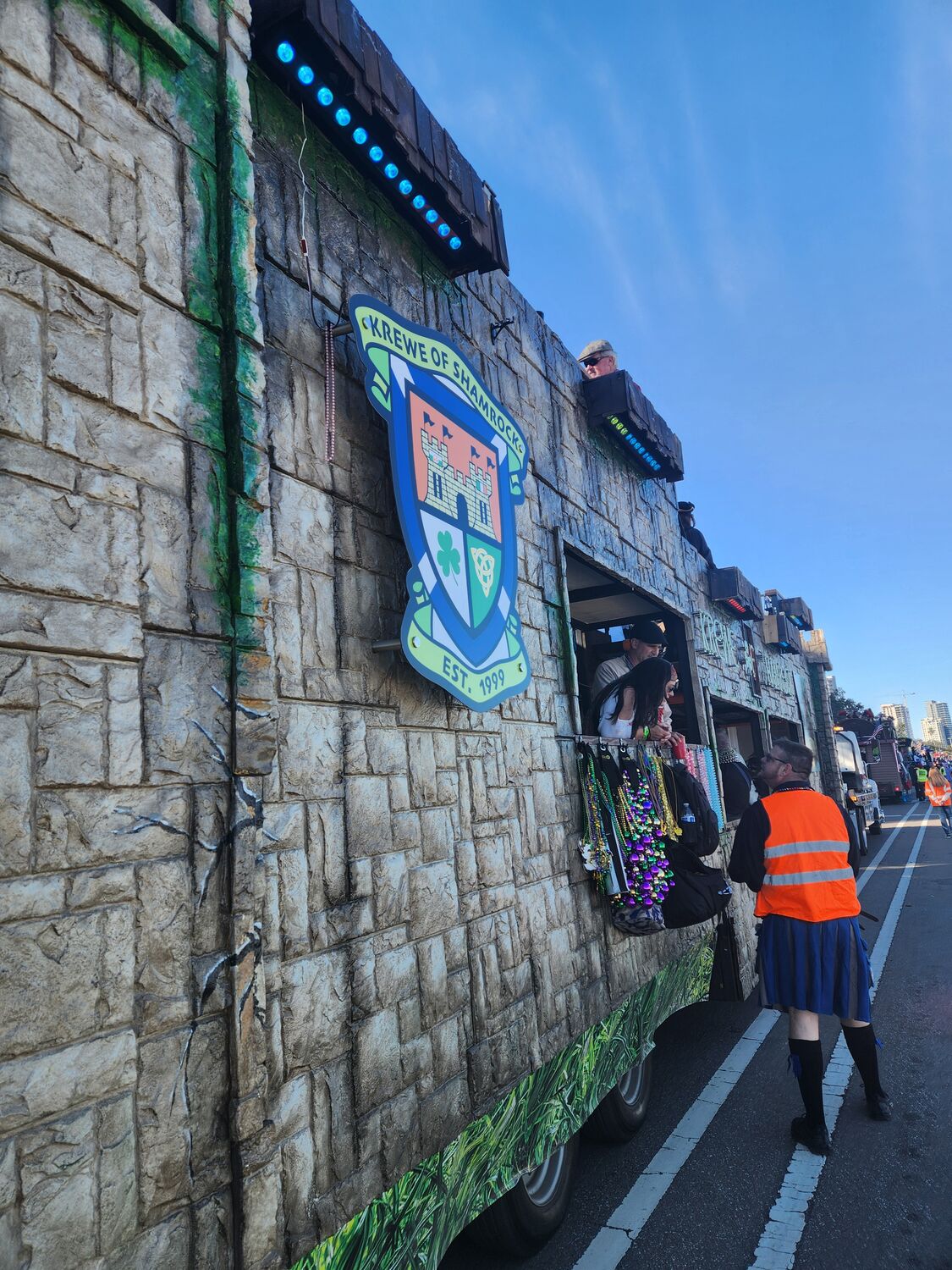 The castle float: a privilege to ride, a responsibility to ride safely
☘ Fun fact: Our castle float is a rolling clubhouse: multiple levels, a bar with a kegerator, two bathrooms, and the krewe's signature top-hat-wearing skull keeping watch over it all.
Quick check: What is the correct way to step off the float?
2Bead Etiquette & the Bead-Free Bay📿 Member know-how · throw like a proOpen ▾☘
What you'll learn
- All beads are tossed gently and underhand. Overhand throws are strictly forbidden: aim low and never toward anyone's face.
- No early throws: beads don't fly until the parade officially reaches its starting point (Bay to Bay Boulevard for Gasparilla).
- De-bag before you stage: no plastic bags are allowed on the parade route, so all beads come out of their packaging before the parade begins.
- Hand beads directly to small children near the curb rather than throwing, stay out of arm's reach of the crowd line, and never hand beads to police officers; they are working and need their full attention.
- Throwing beads into the bay is illegal, and the Krewe proudly supports the #BeadFreeBay conservation campaign with the City of Tampa and The Florida Aquarium, keeping our celebration out of our waterways.
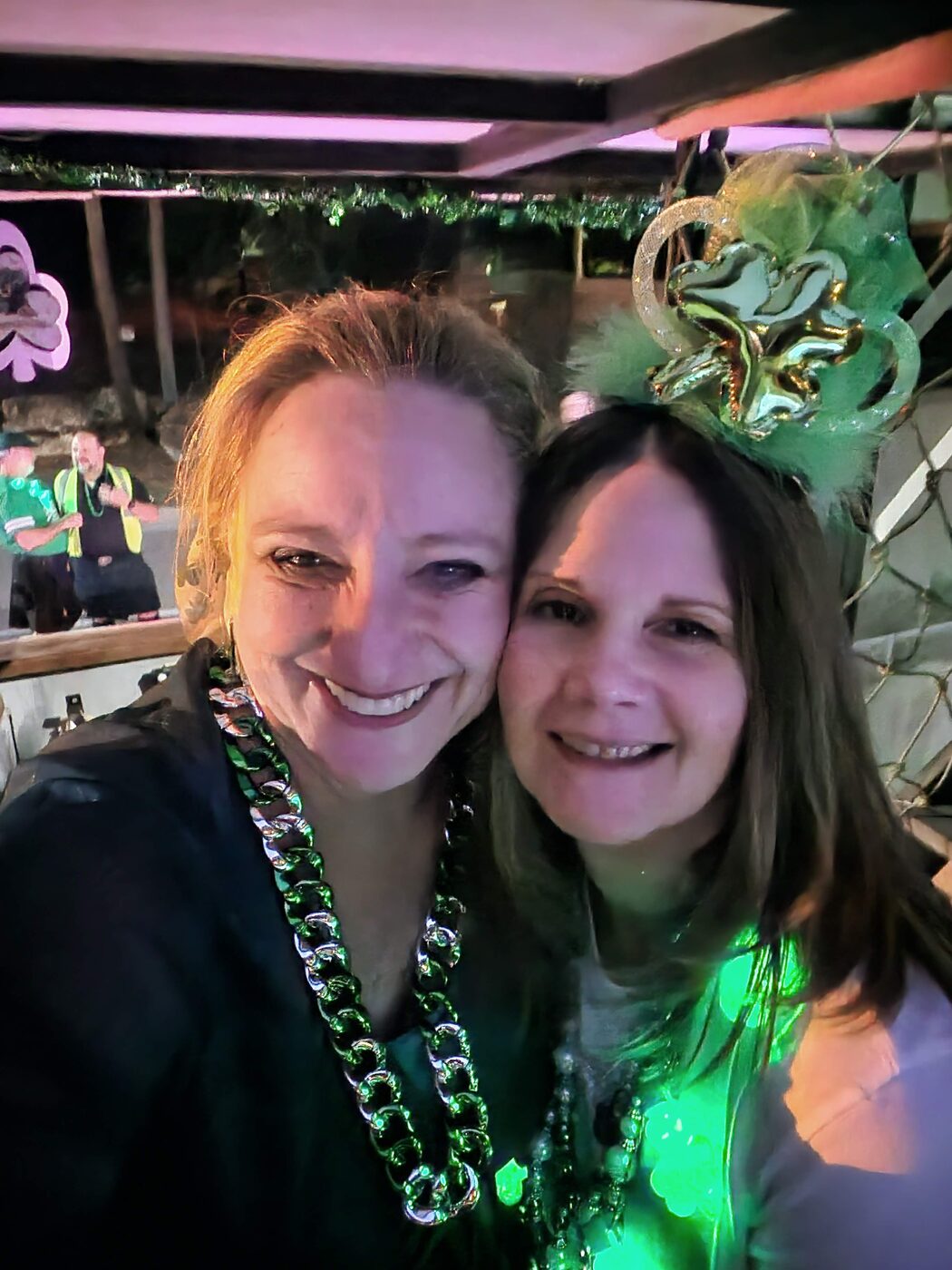 The good stuff: green and gold, thrown underhand with a smile
☘ Fun fact: Traditional parade seasons can send thousands of plastic beads into local waterways. "Purposeful celebration" means we bring the joy and take the plastic home.
Quick check: How should beads be thrown to the crowd?
3Earning Your Wristband: Parade Eligibility🎟 Member know-how · how you make the rosterOpen ▾☘
What you'll learn
- Marching in our parades isn't automatic with membership; it's a status earned through good standing, and it starts with annual dues paid in full.
- Every member attends the season's mandatory safety briefing; QR codes verify attendance at the meeting, along with the digital safety and logistics training.
- Full Members contribute 12 volunteer hours per Krewe year, verified by the Charity Chair with photos or site-coordinator sign-off. If life gets in the way, hours may be fulfilled through an in-kind donation of $12 per hour.
- A signed liability waiver and Code of Conduct must be on file, and guests must be pre-registered with their own paid fee and waiver before a guest wristband is issued.
- The golden rule is absolute: No Wristband, No Boarding. No exceptions, for the float or the march, and your wristband stays visible the whole route.
☘ Fun fact: The krewe's volunteer hours add up fast: members give hundreds of service hours and thousands of dollars to Tampa Bay charities every season, and every hour counts toward your parade eligibility.
Quick check: What is the absolute rule for boarding the float on parade day?
4The Creed of the Krewe📖 Reading · Our Code of Conduct, and why it mattersOpen ▾📖
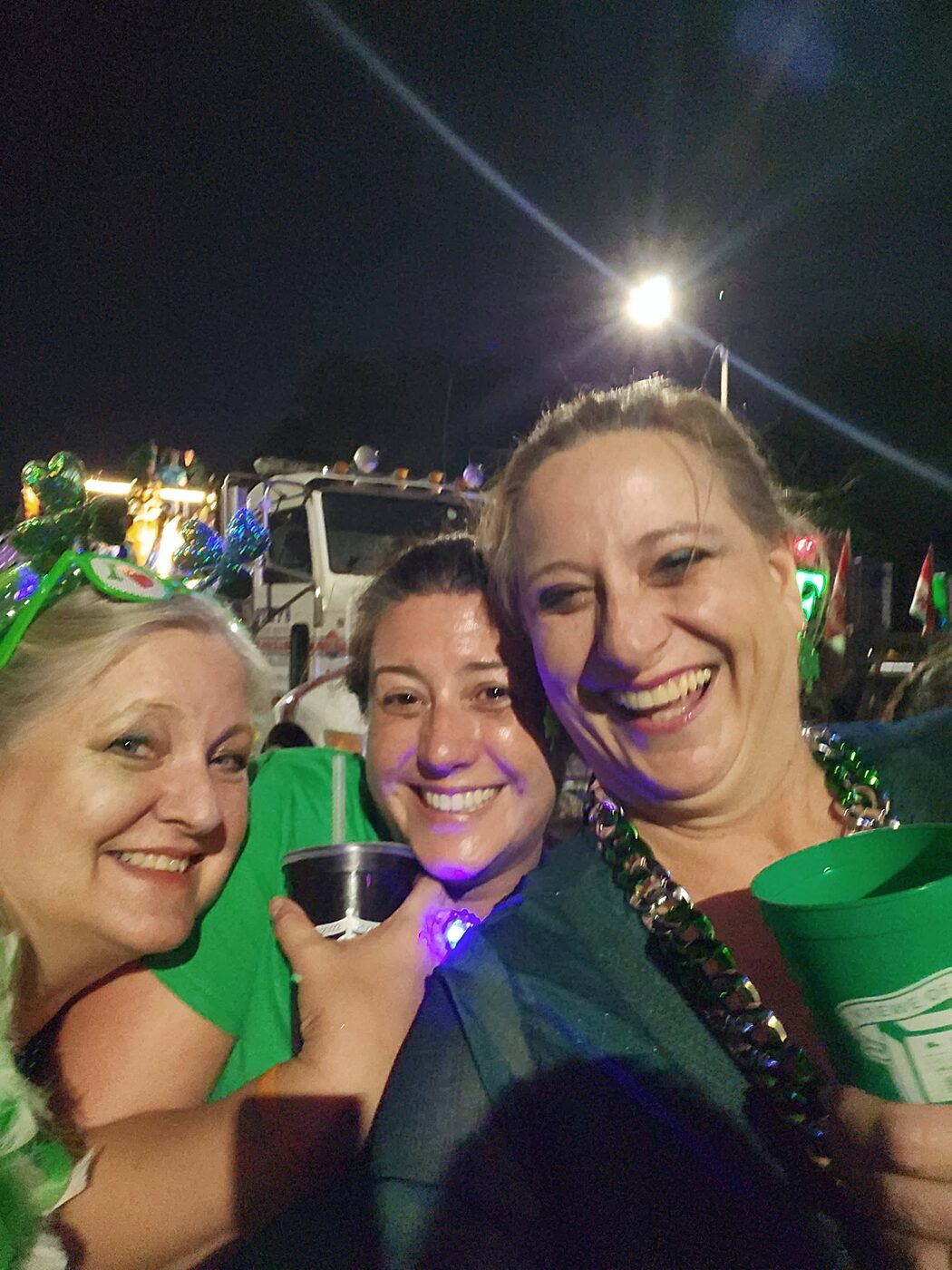
A krewe built on friendship needs a few clear rules to protect it. Our Code of Conduct is the quiet backbone of everything we do in public: it keeps the fun safe, the friendships strong, and the krewe's good name untarnished in front of the whole bay. Verbal intimidation, illegal substances, and behavior that puts others at risk have no place on our route or at our tables.
The standard comes with real teeth. A first infraction can bring a reprimand, a fine, or suspension from a parade. A second brings automatic suspension from at least one parade plus a fine. A third means revocation of membership. Excessive drunkenness is never tolerated, and anyone who crosses the line on parade day can be placed on the float for the remainder of the route at the discretion of a board member, the sergeant at arms, or security.
None of this exists to spoil the craic; it exists so there can be craic at all, season after season. When the public sees a krewe that celebrates hard and carries itself well, the whole heritage we represent stands a little taller.
Krewe Life & Giving Back3 modules
1The morning the floats roll📖 Reading · Parade dayOpen ▾📖
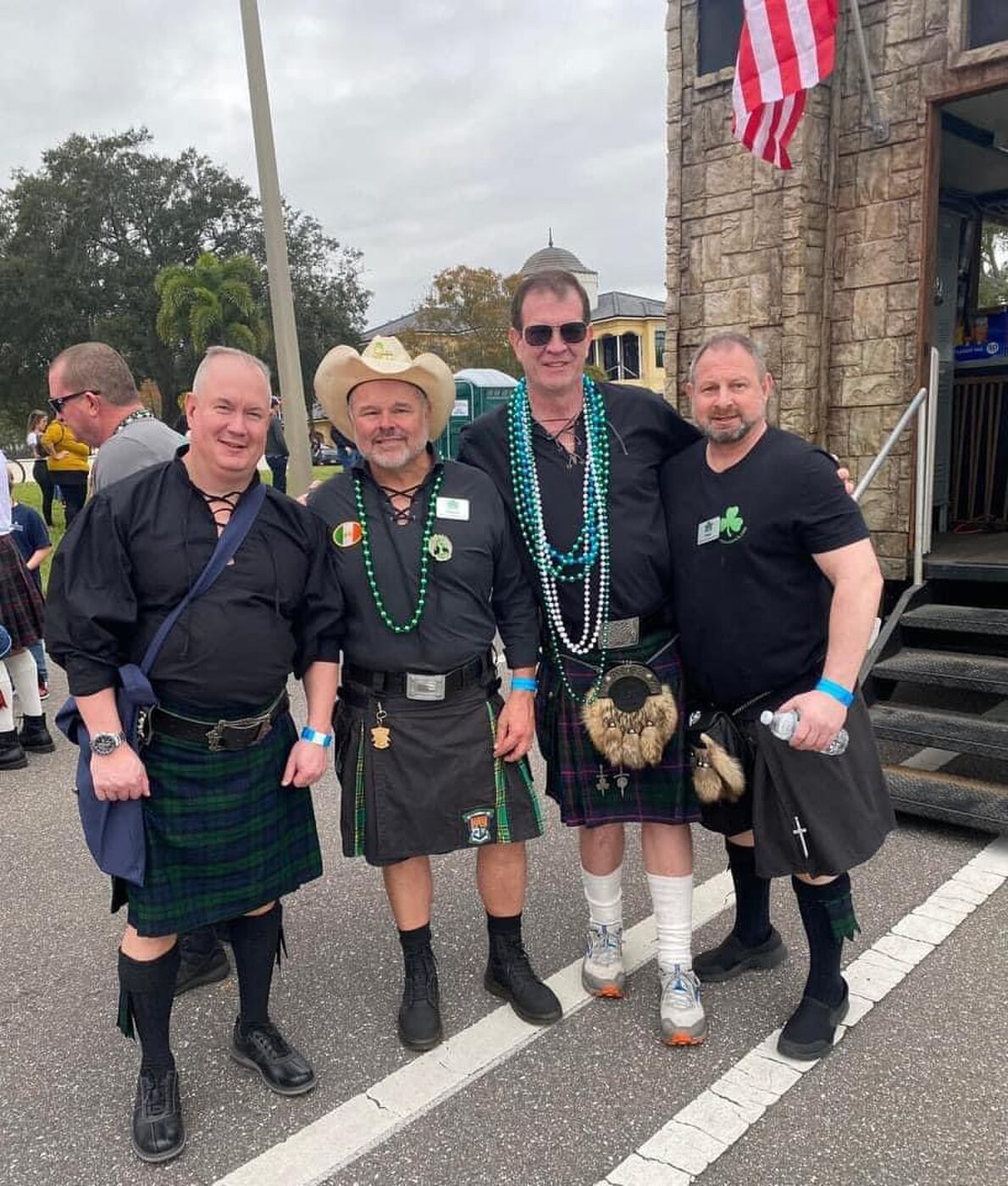
There's a particular kind of magic to parade morning. The kilts come out of their garment bags, the beads get untangled, and somebody's always missing a sporran. Then the pipes start to tune, that first wheezy drone fills the air, and a hundred neighbors suddenly become one krewe.
Watch a first-year member on that morning. They arrived early and a little nervous, fussing with an unfamiliar kilt, wondering if they'd fit in. Three hours later they're waving to strangers like old friends, tossing beads to kids riding high on shoulders, and walking taller than they did at dawn. Nobody teaches that. The route does.
That's the secret we relearn every season: the parade we give Tampa Bay gives back double. Strangers on the curb wave their little flags, children dash for beads, and for a few green-and-gold hours the whole bay feels like family. We march to bring the joy, and we come home carrying more of it than we brought.
2The Family You Choose📖 Reading · Our welcomeOpen ▾📖
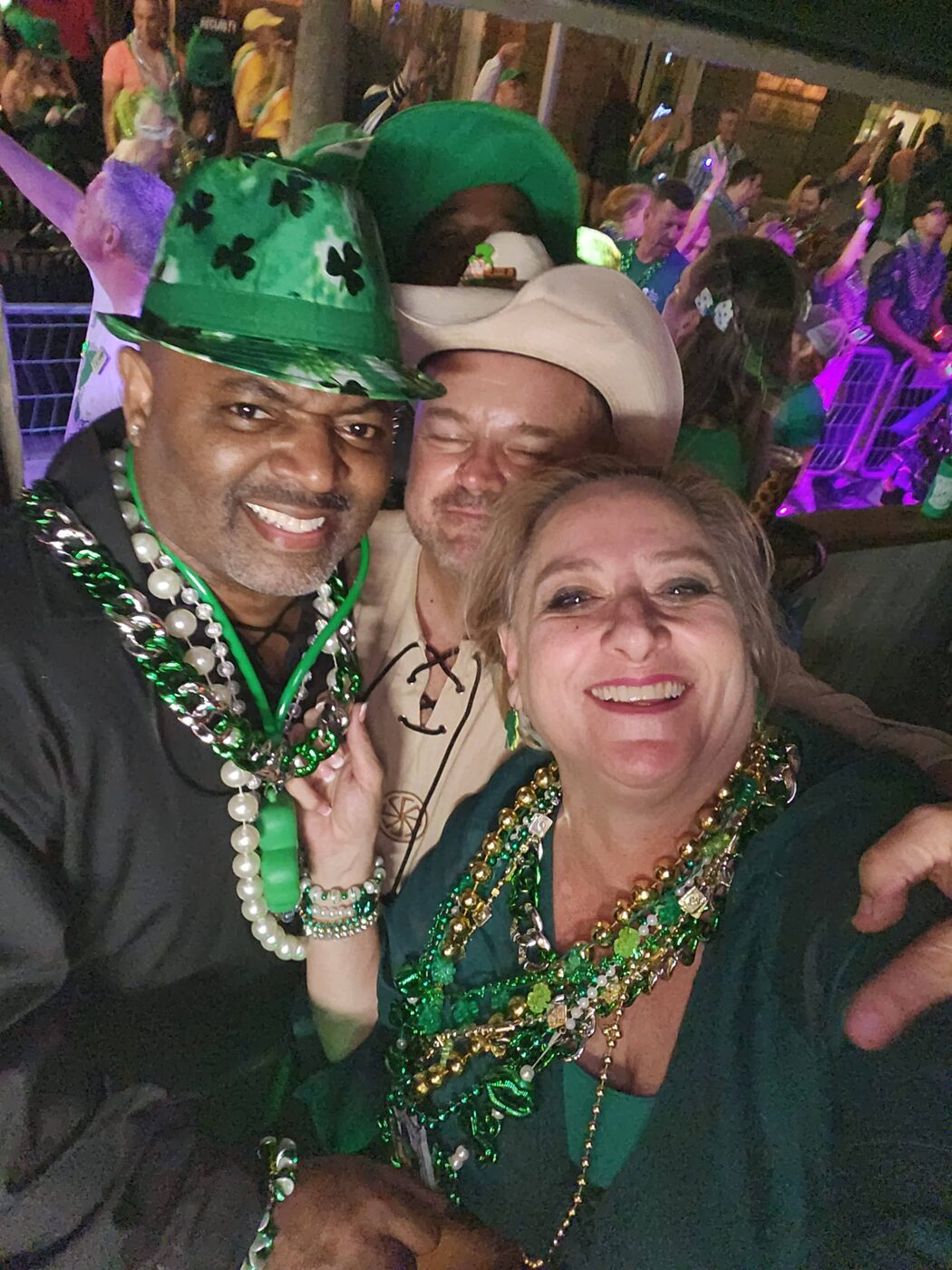
Ask almost anyone in the Krewe what kept them, and they won't say the parades or the party. They'll say the people. Folks arrive knowing one member, or none, and within a season they've got a whole table of friends saving them a seat. Irish or not, kilted or not, everyone's welcome.
Then something quietly wonderful happens. The shy one ends up running a committee. The one who swore they'd never sing in public is the one starting the songs. The couple who joined "just for the parade" is hosting the planning dinner. Nobody sets out to become more here; there's simply room to try, and a whole krewe cheering the moment you do.
"All for Fun, Fun for All" isn't just our motto; it's how a stranger at their first meeting becomes the one tuning the pipes a few years on. New faces, as we like to say, are simply old friends we haven't met yet. Pull up a chair. Yours is next.
3More Than a Good Time📖 Reading · Service & charityOpen ▾📖
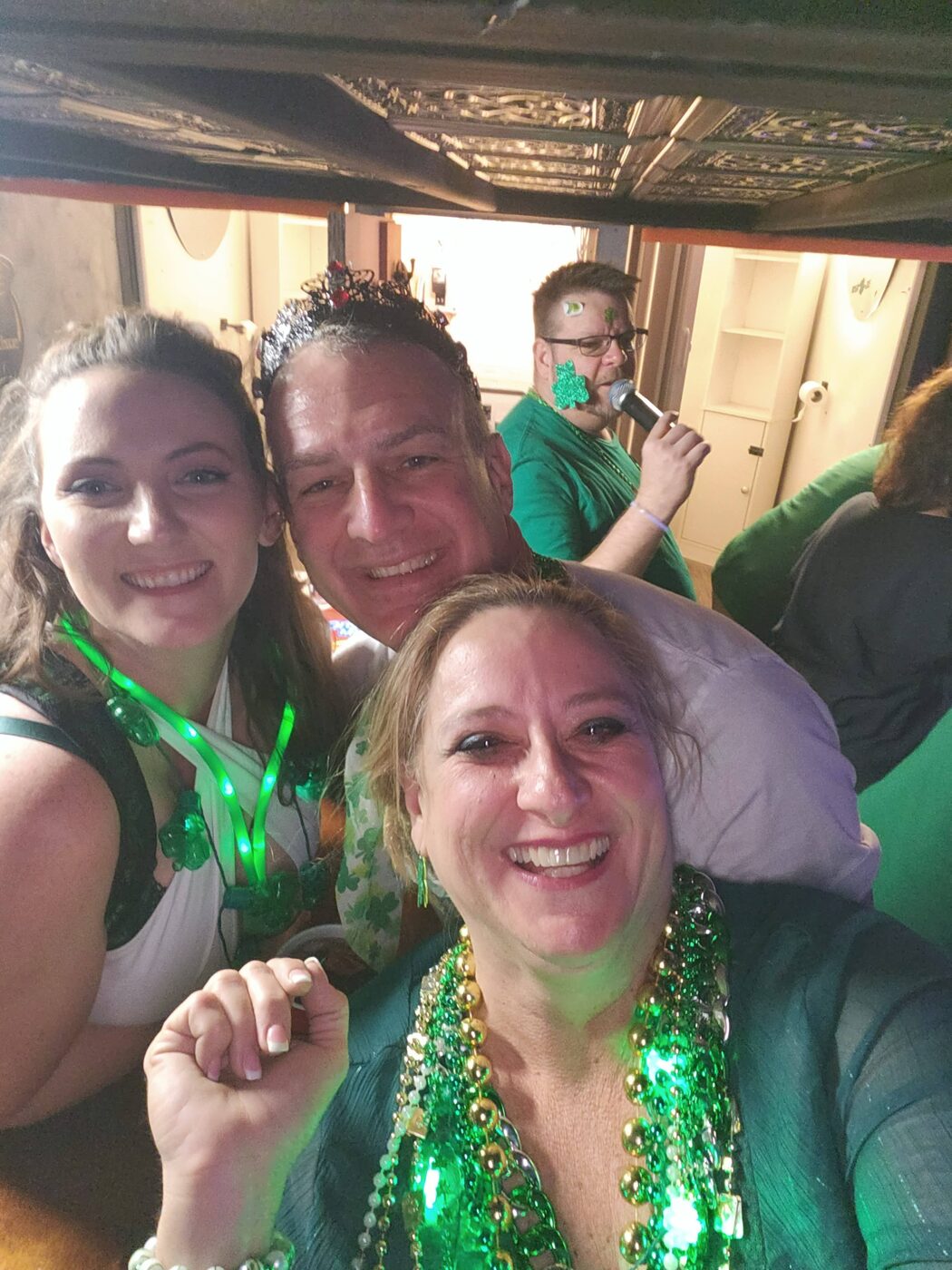
For all the craic, the Krewe has always believed a good time should do some good. Over the years our members have given thousands of dollars and countless hours to Tampa Bay: unloading delivery trucks for families starting over, standing beside children fighting illness, and filling food drives and every gap in between.
It's quiet work, mostly, far from the parade route. No beads, no crowds. Just a Saturday morning, a borrowed truck, and a family stepping into a furnished home for the first time. Ask the members who were there which day of the season they'd never trade, and that's the one they name. It works in a way that's hard to explain and easy to feel: show up to carry someone else's load, and you walk out lighter.
Every hour given is a thread, and the threads become the same strong weave that holds a krewe, and a community, together. If that sounds like your kind of morning, our Service & Charity page is the place to start. Bring a friend. Come see what a good time can build.
Music & Dance4 modules
1The Pipes & the Session🎻 Music · watch and listenOpen ▾☘
What you'll learn
- Ireland's uilleann pipes are gentler cousins of the Highland bagpipe, played sitting down.
- "Uilleann" comes from the Irish word for elbow: the piper pumps a bellows with one arm instead of blowing.
- The bodhrán, a goatskin frame drum struck with a small tipper, is the heartbeat under the tunes.
- Put a few players in the corner of a pub and you have a session: tunes traded by ear, no sheet music in sight.
☘ Fun fact: The uilleann chanter can play two full chromatic octaves, nearly twice the range of the Scottish pipes' nine notes.
Quick check: How does an uilleann piper power the pipes?
2Seven Minutes That Changed Irish Dance👞 Dance · a 7-minute watchOpen ▾☘
What you'll learn
- In 1994, an unknown act called Riverdance filled the intermission of the Eurovision Song Contest in Dublin.
- Those seven minutes electrified the world and relaunched Irish dance as a global phenomenon.
- The stiff arms and flying feet come from the old dance-master tradition; the costumes from the Celtic Revival.
☘ Fun fact: Riverdance was created to fill a seven-minute TV intermission. It grew into a show seen live by over 25 million people.
Quick check: Where did Riverdance premiere?
3Pipes, Drums & the Music Session📖 Reading · Irish & Scottish traditionOpen ▾📖
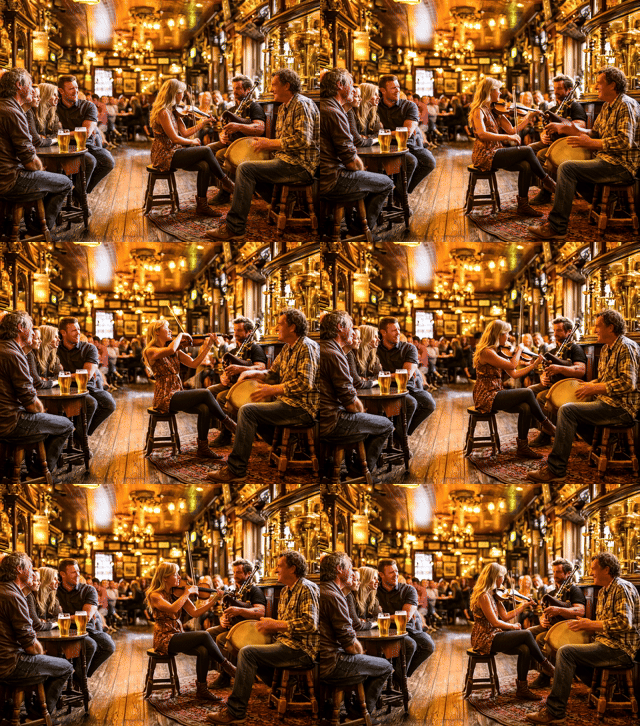
There is no mistaking the first skirl of the pipes. Whether it's the Great Highland bagpipe of the Scottish tradition or the gentler Irish uilleann pipes, bellows-blown and played sitting down, the sound carries centuries in it. Add the heartbeat of the bodhrán, the goatskin frame drum struck with a little wooden tipper, and you have the engine of any good krewe.
Gather a few players in a corner of a pub and you have a "session": tunes traded by ear, jigs and reels rolling one into the next, no sheet music in sight. And when the fiddle strikes up, the céilí dancing begins: lines and circles and the whirl of a good time shared. It's participation, not performance, and that's exactly the spirit we march in.
4Dancing Irish Women📖 Reading · Steps through timeOpen ▾📖
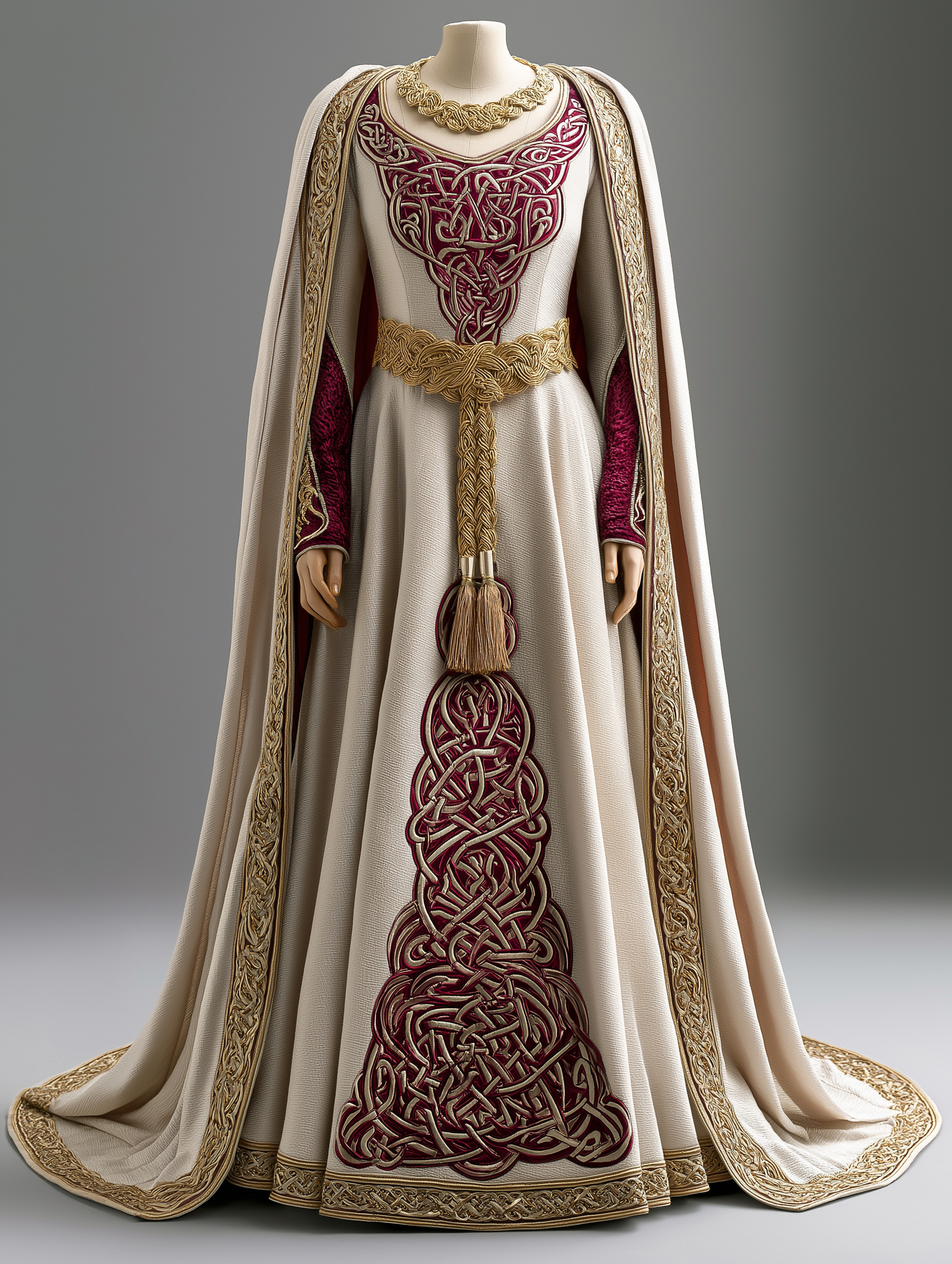
From the curled hair and embroidered dresses to the fancy footwork, women's Irish dance carries centuries of heritage in every step. The costumes themselves tell the story: born of the late-19th century Celtic Revival, when a full-length léine, woven crios belt, and flowing brat cape became a proud emblem of Irish identity, and Celtic knotwork from the Book of Kells first found its way onto the dancers' dresses.
Over the decades those costumes have evolved from school uniforms into dazzling, crystal-covered solo dresses, a tradition kept alive by generations of women who march, pipe, and dance right alongside the men. The Smithsonian's Center for Folklife & Cultural Heritage tells the full story beautifully.
Irish Heritage & History5 modules
1The Real St. Patrick📜 History · a 3-minute watchOpen ▾☘
What you'll learn
- Patrick wasn't born Irish: he came from Britain, first as a captive, later as a missionary.
- The famous "driving out the snakes" story is an allegory; Ireland never had snakes at all.
- The parade tradition began in America, long before Ireland held one of its own.
☘ Fun fact: New York City marched a St. Patrick's Day parade in 1762, more than a century before Ireland held its own.
Quick check: Where was St. Patrick born?
2The Gaelic Revival & the Saffron Kilt📜 Heritage · why we wear what we wearOpen ▾☘
What you'll learn
- In the late 1800s and early 1900s, the Gaelic Revival swept Ireland: a movement to reclaim the Irish language, sport, music, and dress as a proud national identity distinct from Britain.
- The Irish kilt was born in that era. Rather than adopt Scottish clan tartans, revivalists chose solid saffron, a warm golden-orange, and sometimes solid green, as a distinctly Irish national dress.
- Patrick Pearse adopted the saffron kilt for his Irish-language school, St. Enda's, founded in 1908, and Irish pipe bands took it up soon after; Irish military pipers wear saffron to this day.
- Irish county tartans (Cork, Kerry, Galway, Dublin, and the rest) are a later creation, designed in the second half of the twentieth century. They hold no official government standing, and that doesn't make them one bit less meaningful: they are a modern, heartfelt way to wear the county your family came from.
- One more Irish distinction: unlike the back-pleated Scottish standard, Irish kilts in our krewe may feature side pleating, a subtle signature of the Irish silhouette.
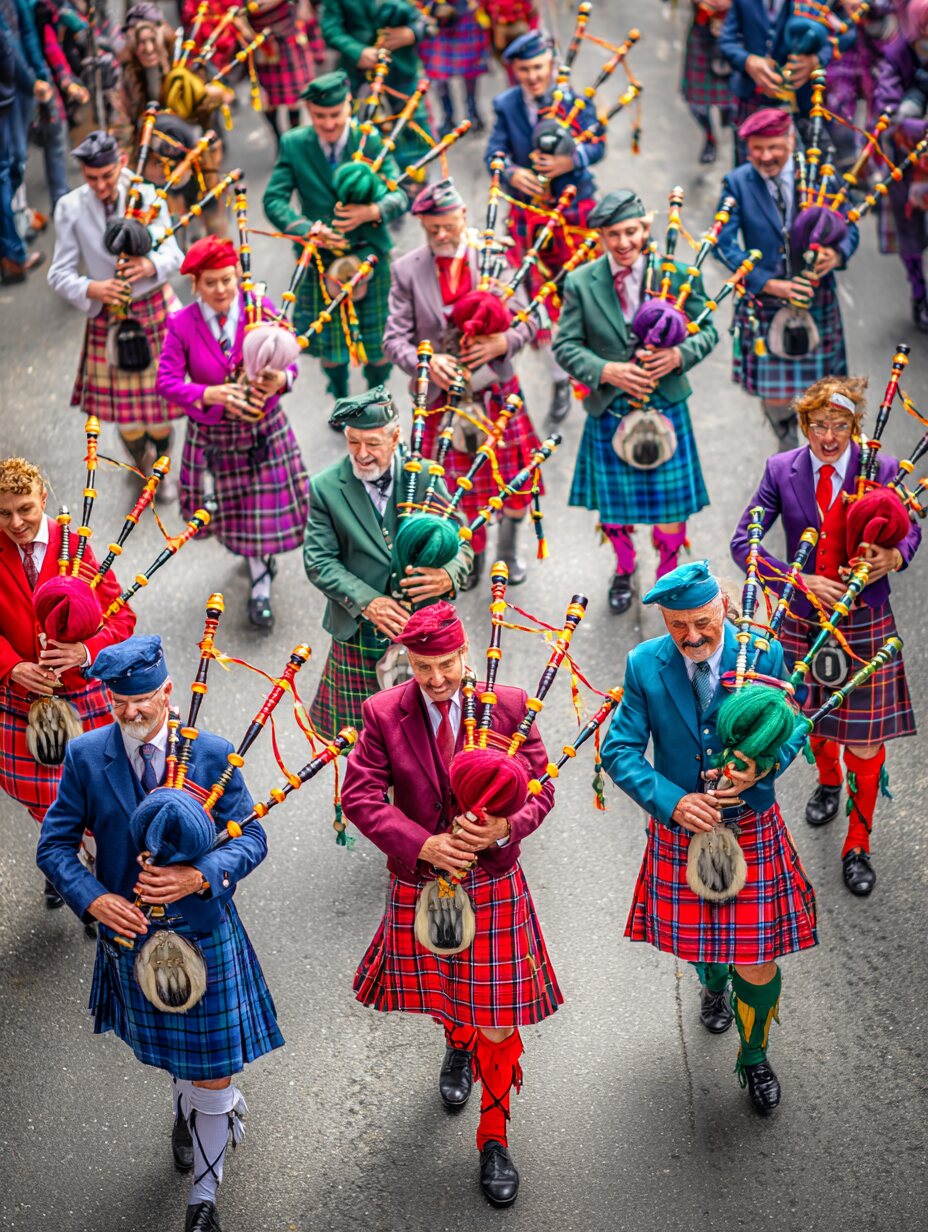 The revival made visible: pipes, kilts, and a heritage worn in public
☘ Fun fact: The Ulster tartan is based on actual cloth found near Londonderry dating to the early 1600s; it was rediscovered and reproduced in 1958, making it the elder statesman of the Irish tartans.
Quick check: When and why was the saffron kilt adopted?
3The Irish in America📜 Heritage · the diaspora's storyOpen ▾☘
What you'll learn
- The Great Famine of 1845–1852 changed Ireland forever: roughly a million people died and more than a million emigrated, many crossing the Atlantic to build new lives in America.
- Irish immigrants and their descendants shaped American cities, labor, music, policing, politics, and celebration, and they built the St. Patrick's Day parade tradition here decades before Ireland held parades of its own.
- Today, tens of millions of Americans claim Irish ancestry, several times the population of Ireland itself. The diaspora keeps the culture alive far beyond the island's shores.
- That is exactly where a krewe like ours fits in: heritage is not merely remembered, it is performed. Wearing the kilt, playing the tunes, marching the route, and giving back to the community are how the tradition stays a living thing.
- And in the spirit of "strength in numbers": you don't need a drop of Irish blood to belong here. Loving the culture and living its generosity is what makes you one of us.
☘ Fun fact: The first recorded St. Patrick's Day parade wasn't in Dublin; it was in the American colonies, with New York City marching in 1762, over a century before Ireland's own parades began.
Quick check: What drove the great wave of Irish emigration to America in the 1840s?
4High Crosses & the Fields of Clover📖 Reading · Irish heritageOpen ▾📖
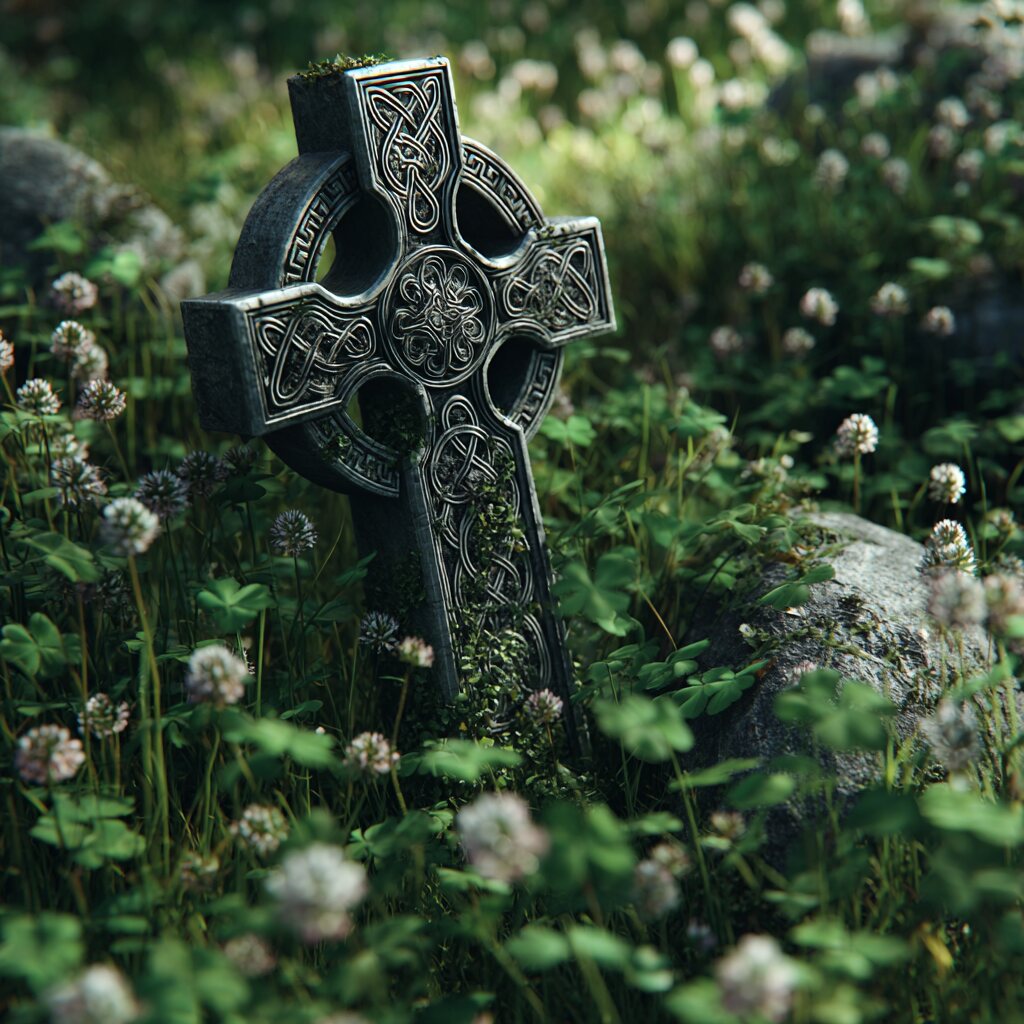
The great stone high crosses of Ireland, ringed where the cross-arms meet, once stood as gathering points and teaching tools, their panels telling stories to all who passed. Set among the clover, they marry the sacred and the everyday in a way that feels deeply Irish.
And the clover itself? Saint Patrick, so the tradition goes, plucked a humble shamrock to explain the Trinity with its three leaves on a single stem, and the little plant has been ours ever since.
5The Wheel of the Year📖 Reading · Seasons & celebrationsOpen ▾📖
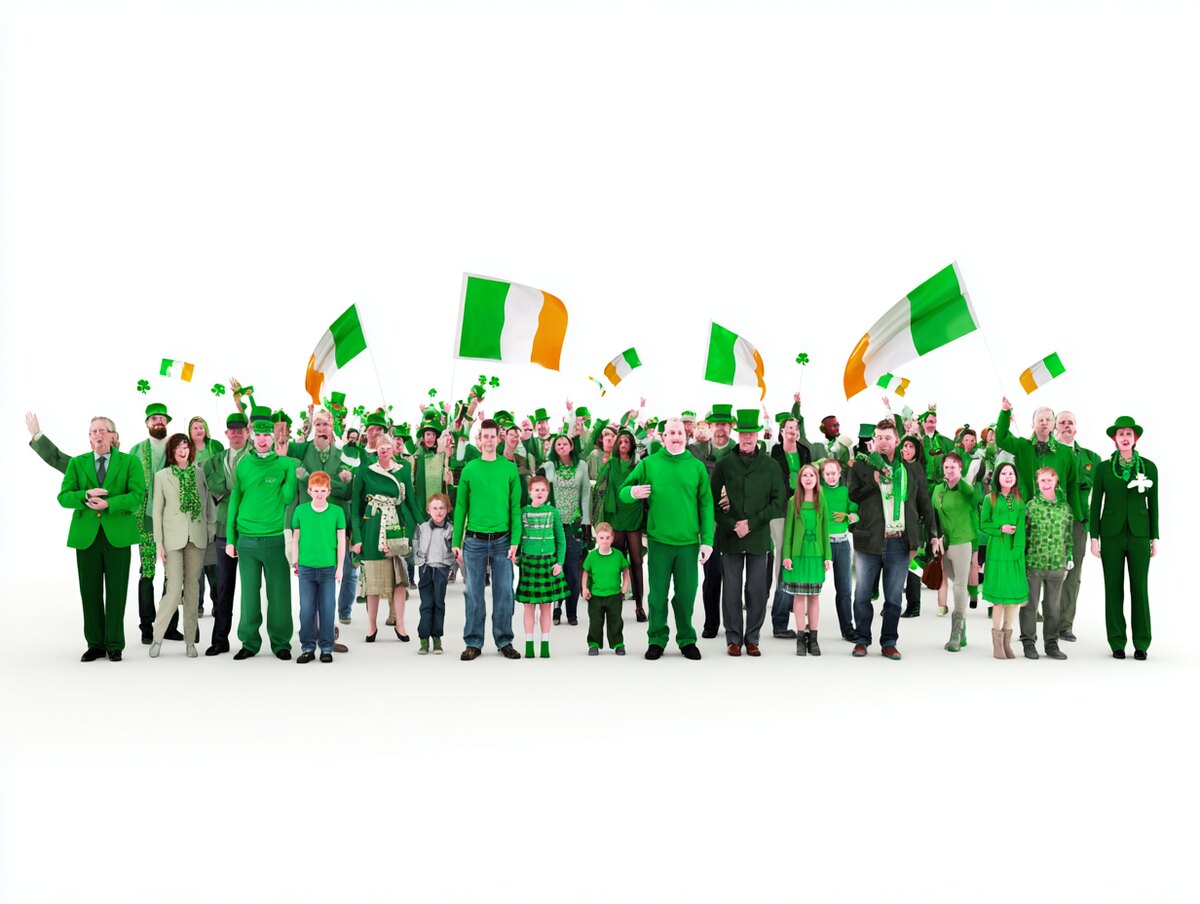
The Celtic calendar turns on four great fire-festivals. Imbolc in February greets the first stirrings of spring and Saint Brigid. Bealtaine in May lights the summer fires. Lúnasa in August gives thanks for the harvest. And Samhain at the end of October, when the veil between worlds grows thin, is the ancient root of our modern Halloween.
Of course, the day we hold dearest is the 17th of March. Saint Patrick's Day began as a quiet feast and grew into the world's great celebration of all things Irish, and in Tampa Bay there's no finer place to wear your green than marching with the Krewe.
Legends & Myth4 modules
1Finn McCool & the Giant's Causeway🏰 Legends · a 5-minute watchOpen ▾☘
What you'll learn
- The legend of Fionn mac Cumhaill, the giant who built a stone causeway to face a Scottish rival.
- How Finn's quick-thinking wife won the day with a cradle and a costume.
- The real basalt columns still standing on the Antrim coast, all forty thousand of them.
☘ Fun fact: The hexagonal columns are real: cooling lava cracked into them some 60 million years ago. The story is better, though.
Quick check: How did Finn "defeat" the Scottish giant?
2The Salmon of Knowledge📖 Reading · A tale of ÉireannOpen ▾📖
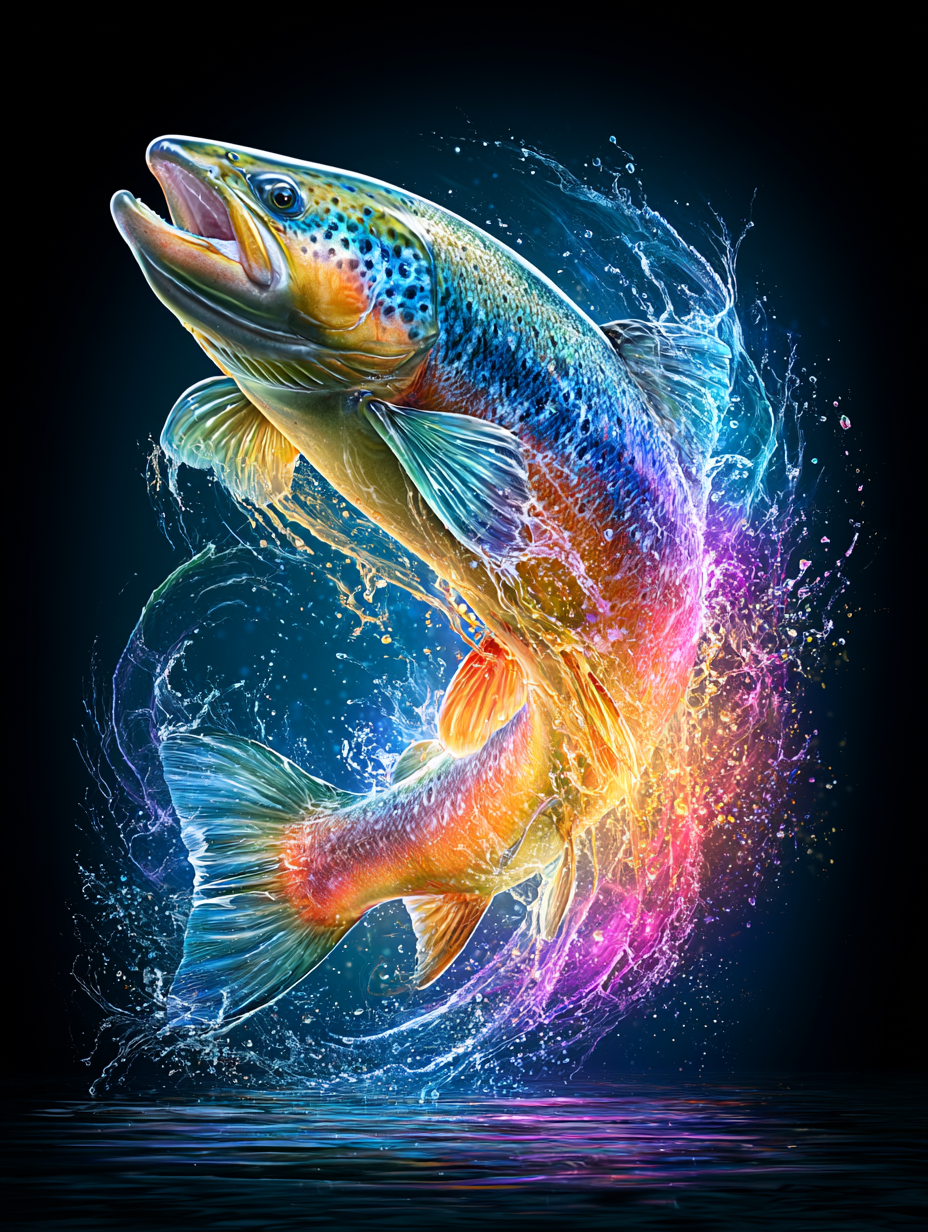
There is a fish that swam in the Well of Segais, at the source of the River Boyne, and whoever tasted its flesh would gain all the wisdom in the world. The salmon had fed on hazelnuts fallen from the nine sacred trees that ringed the well, and in each nut was the knowledge of the ages.
The poet Finnegas spent seven long years fishing that river, waiting for his chance. When at last he caught the salmon, he set his young apprentice, a boy named Fionn mac Cumhaill, to cook it, but warned him firmly: do not taste a single bite. As Fionn turned the fish over the fire, a blister of hot skin burst and burned his thumb. Without thinking, he pressed it to his mouth to ease the sting, and in that instant, all the wisdom of the world passed into him.
From that day forward, whenever Fionn needed guidance, he had only to press his thumb to his teeth and the knowledge would come. The great hero who would go on to lead the Fianna, Ireland's legendary warrior band, was made not by a sword stroke, but by an accidental taste of something wonderful.
3The Leprechaun: The Clever Protector📖 Reading · Wits, gold, and a palace gardenOpen ▾📖
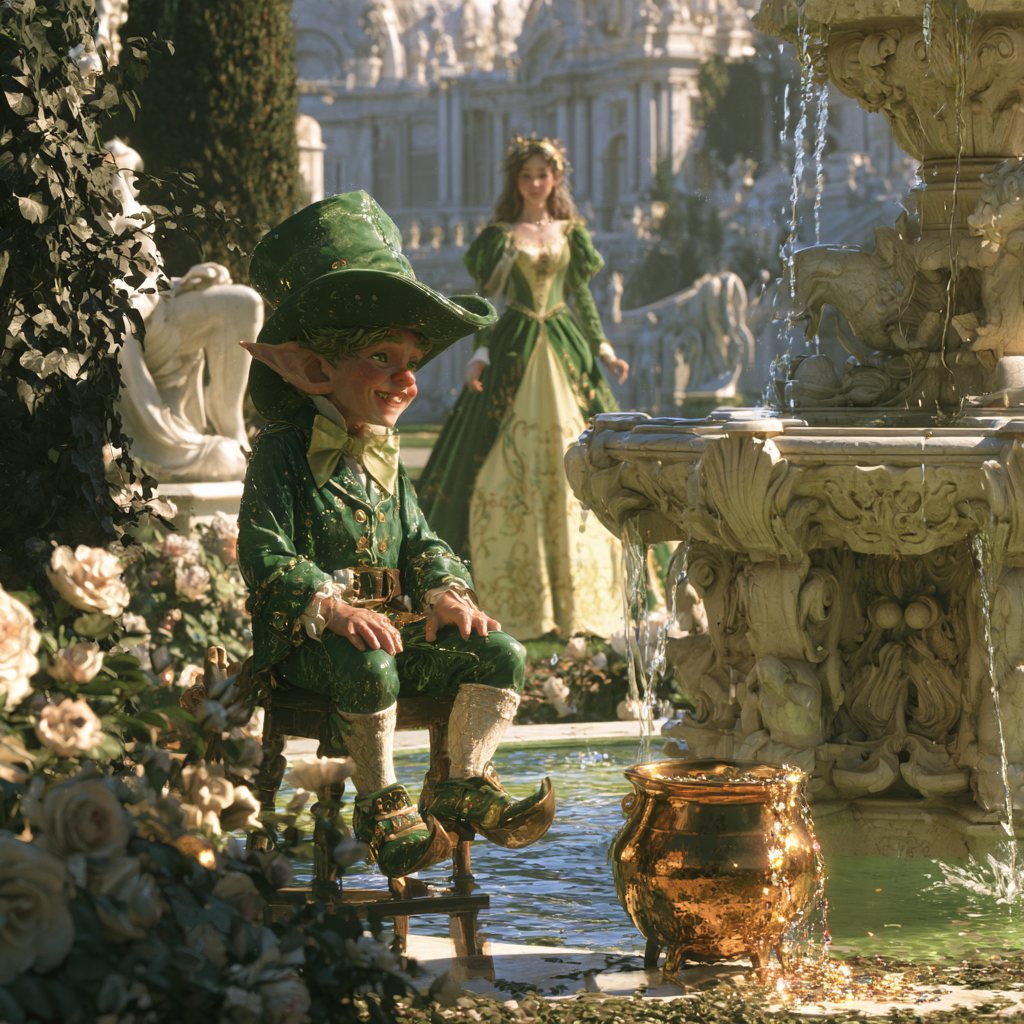
Of all the fair folk of Ireland, the leprechaun is the smallest, and the sharpest. He commands no armies and stands about as tall as your kneecap. What he carries instead is the quickest mind in the country, and every coin in his famous pot was earned the honest way: one perfectly cobbled shoe at a time. He is the shoemaker and banker of the fairy world, a craftsman who never breaks his word and never forgets who tried to make him break it.
They tell of a leprechaun named Lorcan who kept his gold beside an old marble fountain in a palace garden, where blush roses climbed the ivy and crystal water sang over carved stone. The pot sat in warm sunlight, jewels and coins spilling like spilled laughter, while Lorcan rested on a little stool in his emerald suit and pointed shoes, content as any king. One afternoon a young woman in an elaborate green and pale yellow gown found him there. She had heard the old stories: catch a leprechaun, and his fortune is yours. She stepped from behind the fountain, heart racing, and closed her fingers around his tiny wrist.
"Show me where the rest is buried," she whispered, sure that size and surprise had won the day. Now, a leprechaun cannot lie, and Lorcan did not. "The gold you seek lies under a rosebush at the far edge of this garden," he said, and led her straight to it. She tore a ribbon from her gown and tied it to the branch to mark the spot. Lorcan, ever courteous, gave his solemn promise not to remove that ribbon, if only she would free him long enough to fetch a spade. Off she ran through the roses, certain the treasure was already hers.
She returned to find every promise kept, and a garden transformed. Every rosebush for a hundred paces wore an identical ribbon of green and pale yellow. A thousand blooms. A thousand ribbons. Not one clue which bush held the gold. Lorcan had not lied, had not stolen, had not so much as raised his little fist. He sat again by the fountain, water still sparkling on his coat, pot of gold exactly where it belonged, watching her with luminous green eyes that held more mischief than malice.
That is the true genius of the leprechaun, too often miscalled mere trickery. His cunning is intelligence in its Sunday best: the wit to protect himself and the wages of his own two hands without force, to honor the letter of his word while teaching the greedy a lesson they will never forget, and to prove, one ribbon at a time, that the sharpest thing anyone can carry is a quick mind. In a krewe that marches on charm rather than muscle, we consider him one of our own.
4Daughters & Warriors of Éireann📖 Reading · Irish legendOpen ▾📖
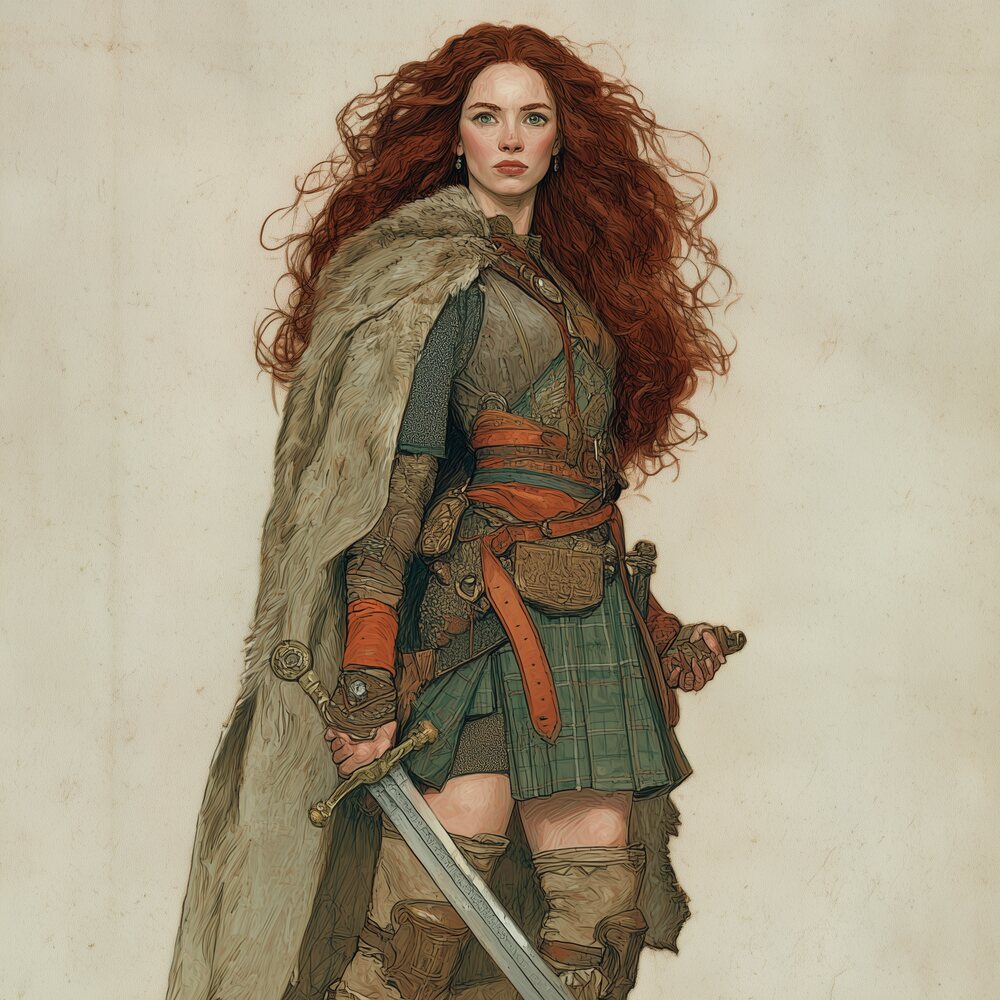
Long before the parades, the women of the Celtic world were warriors, queens, and keepers of the law. Queen Medb of Connacht led armies into the great cattle raid of the Táin; the war-goddess The Morrígan wheeled over the battlefield as a crow; and on the Isle of Skye, the warrior-woman Scáthach trained the greatest heroes of the age.
It's a heritage worth remembering: in the Krewe of Shamrock, the women march, pipe, and lead right alongside the men: daughters of Éireann, every one.
Language & Symbols3 modules
1Speak a Little Irish🗣 Language · listen & repeatOpen ▾☘
What you'll learn
- The four phrases every member of the krewe should have in their pocket.
- How to pronounce them like you mean them (tap the speaker to hear two of them).
- You needn't be fluent; a single warm word, well meant, is pure Irish.
☘ Fun fact: Irish (Gaeilge) is one of Europe's oldest living written languages, with texts reaching back to the 4th century.
Quick check: What does "Céad Míle Fáilte" mean?
2Sláinte! A Few Words of Irish📖 Reading · As Gaeilge, in the Irish languageOpen ▾📖
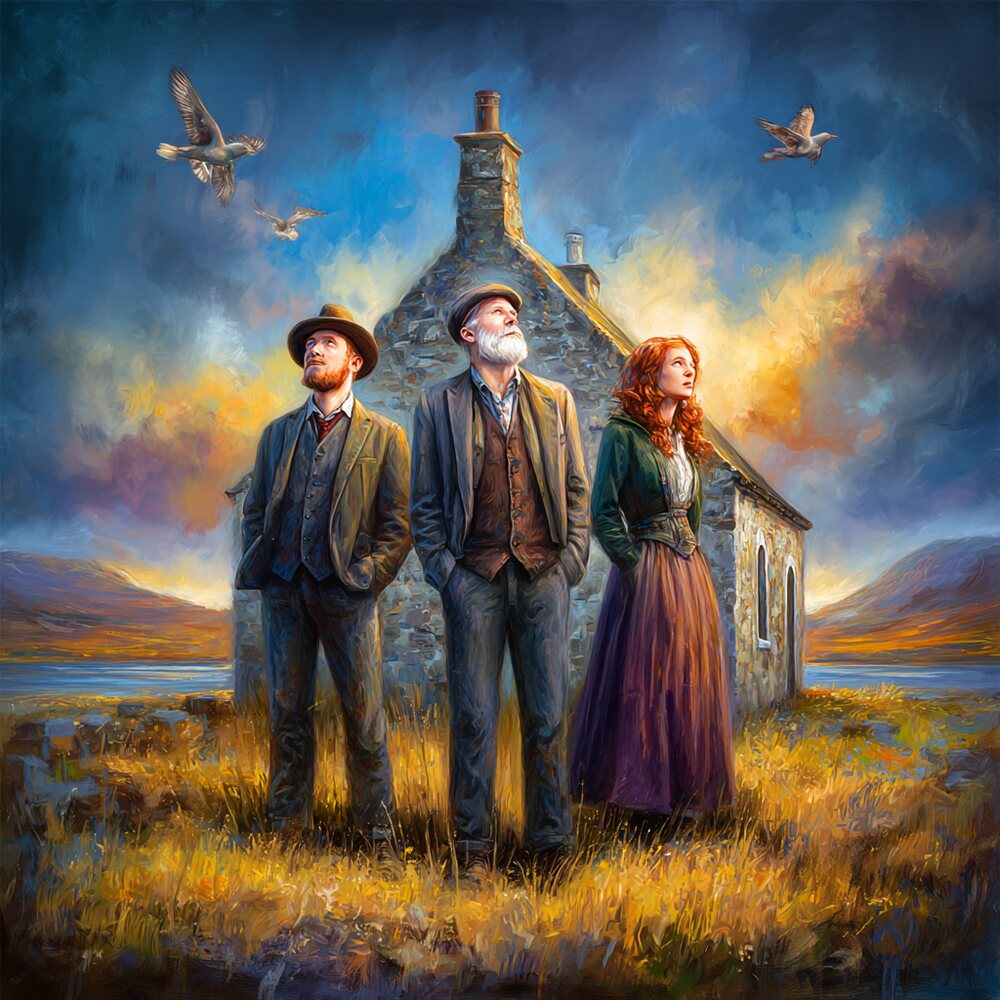
A few words of Irish go a long way. Raise a glass and you'll hear Sláinte (SLAWN-cha), which means "health!" Our own welcome, Céad Míle Fáilte (kayd MEE-luh felt-cha), means "a hundred thousand welcomes," and we mean every one of them.
The old blessings are the loveliest of all: "May the road rise up to meet you, may the wind be always at your back." And when someone sneezes, you might hear Dia linn, "God be with us." You needn't be fluent; a single warm word, well meant, is pure Irish.
3The Triquetra: Knot of Three📖 Reading · Irish heritageOpen ▾📖
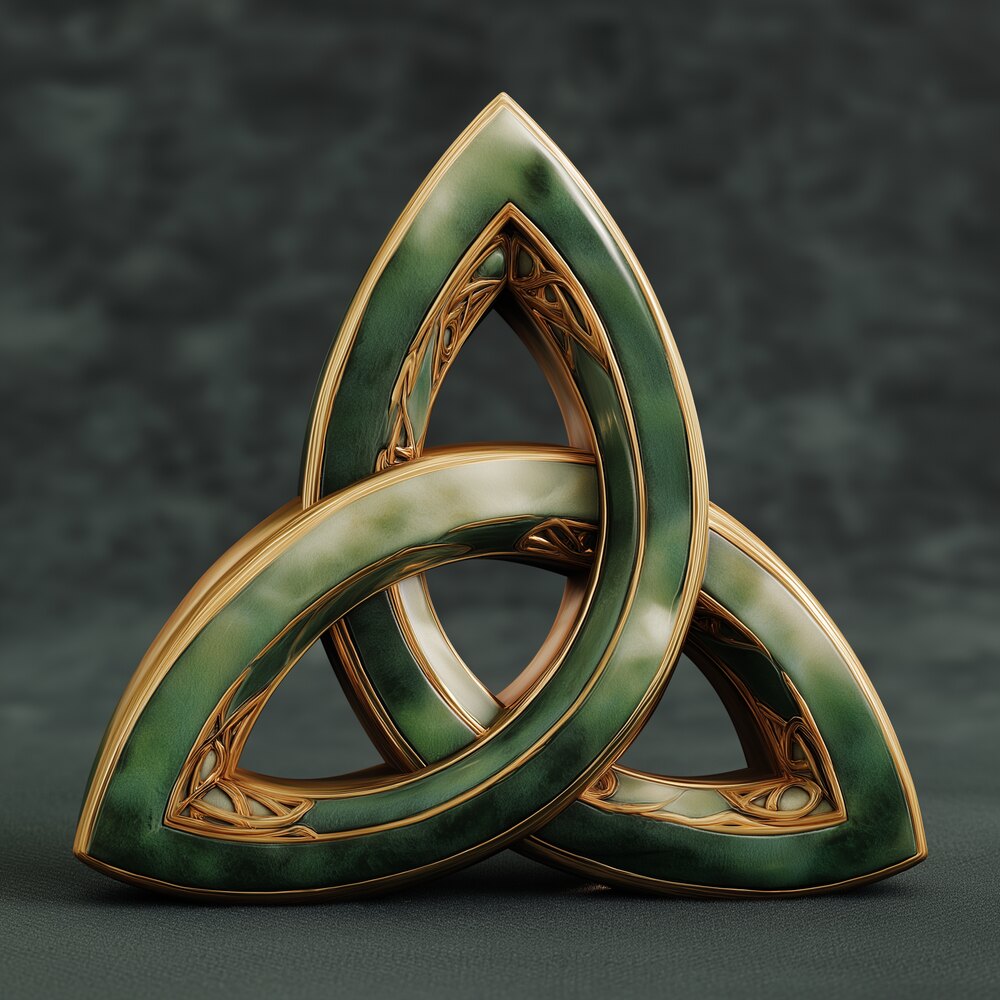
The triquetra, or trinity knot, is among the oldest and best-loved of Celtic symbols. Drawn as a single unbroken line, it has no beginning and no end, a fitting emblem for eternity, unity, and the bonds of community that the early Irish prized above all.
You'll find it carved on standing stones, illuminated in the Book of Kells, and worked into jewelry to this day. We carry it as our quiet reminder that a krewe, like the knot, is stronger for being woven together.
Member KnowledgeContribute yours
☘Member FAQEvents, beads, hours, attire, and merchandiseOpen ▾
Practical answers for members: how to register for events, where to buy beads, volunteer hours and charities, parade attire, guests, and ordering krewe gear.
Open the Member FAQ ☘Modules coming soon. Contribute yours.
This shelf is reserved for knowledge from our own members: parade tips, family lore, recipes, music, and the stories only a Shamrock can tell. Share a piece through Share Yours or the members hub, and help the Heritage Library grow.